
Darsonval vs Ozone Plasma Beauty Device: What's the Difference? (Principle, Comparison & Market Analysis)
Within the home beauty device and professional skincare industry, Darsonval high-frequency machines, ceramic tip ozone plasma devices and small glass probe ozone devices are frequently confused by sellers, distributors and end users. While all three can generate ozone for skin treatment, they differ fundamentally in physical principles, discharge structure, functional mechanisms, user experience and market positioning.
To help global buyers and skincare users make accurate product selections, this article provides an objective and comprehensive comparison covering hardware structure, working principle, usage characteristics, target audience and market potential.
1. Core Comparison Table
| Comparison Item | Traditional Darsonval Device | Ceramic Tip Ozone Plasma Beauty Device | Small Glass Hood Ozone Device |
|---|---|---|---|
| Electrode Structure | Replaceable vacuum glass tube filled with inert gas; fragile and wearable consumable part | Integrated solid ceramic dielectric electrode; no glass tube, no inflatable structure, durable and zero consumables | Hollow glass chamber as dielectric; glass hood probe, no internal inert gas |
| Working Principle | Damped intermittent high-frequency oscillation. Ionizes inert gas inside the glass tube and produces intermittent spark discharge. Ozone is only a secondary by-product. | High-frequency high-voltage current acts on the ceramic tip, ionizing air directly under atmospheric pressure to generate stable plasma, reactive oxygen radicals, and continuous ozone. | Dielectric barrier discharge inside glass hood cavity. Air is ionized to produce ozone gas flowing outward; low content of plasma active species |
| Discharge Feature | Intermittent pulsed sparks with obvious burst-decay-pause circulation | Continuous fine corona micro-discharge, stable and uniform without intermittent spark bursts | Discharge sealed inside glass hood; no visible spark or corona on skin |
| Main Skin Care Effect | Dominated by high-frequency current stimulation to boost skin microcirculation; ozone bacteriostasis is auxiliary | Dominated by chemical effects of plasma active particles and ozone: anti-bacterial, anti-inflammatory, and skin barrier repair; electric stimulation is secondary | Ozone gas oxidation & bacteriostasis dominates; weak plasma particle effect |
| Skin Sensation | Obvious spark stinging feeling, not friendly to sensitive skin | Mild and uniform tingling sensation, suitable for most skin types | Almost no tingling sensation; ozone odor can be smelled |
| Durability & Maintenance | Glass tube easy to break and age, high after-sales cost and regular replacement needed | Anti-oxidation and high-pressure resistant ceramic tip, no vulnerable parts, extremely low maintenance cost | Glass hood is fragile and needs careful handling |
| Market Positioning | Classic entry-level skincare device, high popularity and cost performance | Upgraded tech-based skincare device with optimized experience and professional positioning | Specialized ozone gas care device, for targeted local antibacterial treatment |
2. Distinction Between Glass Hood Ozone Device and Ceramic Tip Ozone Plasma Device
Another category of ozone beauty equipment uses small glass hood probes, which are often mixed up with ceramic tip ozone plasma devices.
Small glass hood ozone probe: It adopts dielectric barrier discharge (DBD) design. Glass works as dielectric material. Discharge happens inside the hollow cavity of the glass hood. High voltage ionizes air inside the chamber to generate ozone gas, which then flows out of the hood opening and reaches the skin. Its main output is ozone gas. The concentration of plasma reactive species is low. Its function mainly relies on ozone oxidation for antibacterial purposes. Discharge takes place inside the glass hood, and no direct plasma corona forms on the skin surface.
Ceramic tip ozone plasma beauty device: Discharge occurs in the open air gap between the ceramic tip and skin. Atmospheric-pressure plasma is generated directly, producing both ozone and abundant reactive oxygen radicals. Plasma active particles interact directly with the skin surface, while ozone acts as a by-product.
Key Differences
- Discharge Location Glass hood: Discharge inside the hollow glass cavity; plasma forms within the hood and ozone gas flows out. Ceramic tip: Discharge in open air between ceramic tip and skin; plasma micro-discharge forms directly on skin surface.
- Active Substances Glass hood: Ozone gas dominates, low concentration of reactive radicals. Ceramic tip: Combined effect of plasma active particles plus ozone.
- Probe Construction Glass hood: Hollow glass chamber, glass acts as dielectric; fragile. Ceramic tip: Solid ceramic dielectric tip, no hollow chamber, high voltage resistance and durable.
- Operation Method Glass hood: The probe usually needs to be placed close to or covering the target skin area to trap ozone gas inside the hood. Ceramic tip: Can be glided over skin with a tiny air gap. Corona discharge acts directly on skin, no enclosure required.
- Skin Sensation Glass hood: Almost no spark or tingling sensation; ozone smell is noticeable. Ceramic tip: Mild uniform tingling from corona micro-discharge.
Summary: The glass hood unit is essentially an ozone gas generator. The ceramic tip version is an open-air plasma generator, with ozone as a by-product.
3. Working Principle Explanation
Traditional Darsonval Device
Darsonval is a classic resonant spark physical therapy device with decades of market application.
It relies on a vacuum glass electrode filled with inert gas. After power on, damped high-frequency pulsed current ionizes the internal gas and creates intermittent spark gaps between the glass tube and human skin.
Its core skincare effect comes from physical micro-current stimulation to accelerate facial and scalp microcirculation. Ozone generation is unstable and serves only as an auxiliary function.
Ceramic Tip Ozone Plasma Device
This is a new-generation atmospheric plasma technology with no traditional glass tube structure.
The high-frequency and high-voltage module transmits stable energy to the solid ceramic tip. With the insulation and energy-gathering characteristics of ceramic, a strong electric field is formed at the tip to ionize ambient air continuously under normal pressure, producing stable plasma, reactive oxygen radicals, and pure ozone.
The core skincare advantage is chemical activation effect: plasma particles act gently on the skin surface to inhibit bacteria, relieve skin inflammation, and improve acne-prone skin. The whole treatment is stable, mild, and far more advanced than traditional current stimulation therapy.
4. Target Audience & Application Scenarios
Traditional Darsonval
Target Users: Entry-level skincare users, family daily care users, basic scalp salons, budget consumers Application: Daily oil control, dandruff removal, basic microcirculation improvement, affordable home beauty care User Trait: Pursue cost performance, accept classic traditional devices, and have low demand for mild skincare experience.
Ceramic Ozone Plasma Device
Target Users: Acne-prone skin users, inflamed skin groups, advanced skincare enthusiasts, professional skincare studios, mid-to-high-end beauty salons Application: Inflammatory skin repair, skin barrier stabilization, acne management, professional refined skincare User Trait: Pursue mild and efficient skincare, reject strong electric spark stimulation, and are willing to pay for upgraded technology and better using experience.
Small Glass Hood Ozone Device
Target Users: Users focusing on ozone antibacterial care, studios for local targeted skin treatment Application: Local small-range ozone antibacterial care User Trait: Their demand focuses on the antibacterial property of ozone gas. They do not require plasma corona effect and prefer non-irritating treatment without tingling.
5. Market Trend & Development Potential
Traditional Darsonval: Mature Stable Stock Market
Darsonval is a globally mature beauty device, extremely popular in Russian regions, Eastern Europe, and Western low-end markets with complete consumer awareness.
- Advantages: Wide audience, low price, mature supply chain, suitable for large-volume wholesale
- Disadvantages: Outdated technology, serious homogenization, transparent profit margin, fragile accessories leading to high after-sales rate, no high-end brand premium
- Market Position: Stable mass-selling product with limited incremental potential
Ceramic Ozone Plasma Device: Fast-growing Upgraded Category
With the global upgrade of skincare consumption, non-invasive, zero-consumable, mild, and efficient beauty devices have become the mainstream trend. As a technical upgraded product, ceramic plasma devices are in a rapid growth period.
- Advantages: Innovative technology, strong market differentiation, excellent user experience, zero consumables, ultra-low after-sales cost, perfectly matching the global anti-inflammation and acne skincare trend
- Market Performance: Rapidly rising popularity on TikTok and Instagram; increasing procurement demand from professional beauty studios and high-end home users
- Potential Verdict: High premium space, strong market competitiveness, and huge long-term growth potential. It is the core upgrading substitute for traditional Darsonval devices.
Small Glass Hood Ozone Device: Niche Specialized Category
Glass hood ozone devices belong to a vertical niche category, specially designed for ozone gas treatment.
- Advantages: Gentle operation without electric tingling, suitable for local care scenarios requiring ozone antibacterial effect
- Disadvantages: Single function, lacking plasma active particle effects, narrow audience base, difficult to become mainstream bestseller
- Market Position: Niche specialized equipment, ideal as supplementary instrument, not recommended as the main promoted product
6. Conclusion
Traditional Darsonval occupies the mature entry-level market with cost-effective advantages. Ceramic tip ozone plasma beauty devices achieve comprehensive upgrades in working technology, skincare effect, user comfort and durability. Small glass hood ozone devices are specialized ozone tools for local antibacterial treatment.
In the long term, traditional Darsonval will retain basic market share for low-budget sales; glass hood ozone devices will maintain niche demand. Ceramic ozone plasma beauty devices represent the key upgrading trend of anti-inflammatory skincare instruments, with stronger market competitiveness and profit potential.
Related articles
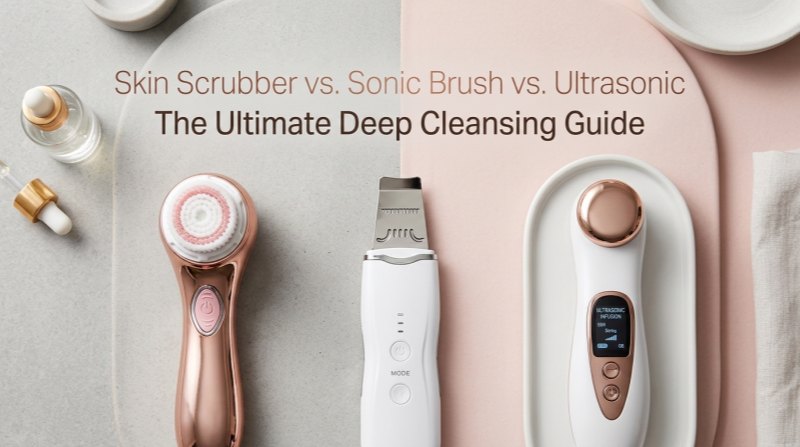
They All Claim to "Deep Cleanse"—But How Do They Actually Clean Your Skin?
Confused by skincare hardware terminology? Discover the real mechanical differences between Sonic Cleansing Brushes, Ultrasonic Skin Scrubbers, and Ul
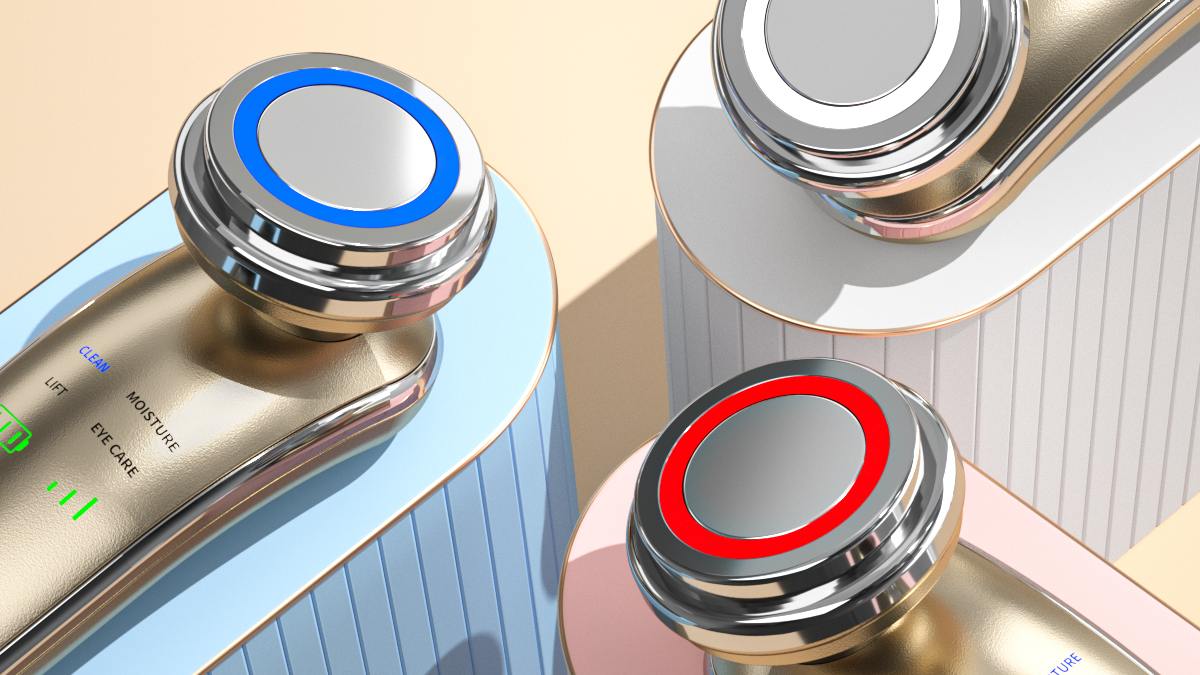
How to Use a Multifunctional Beauty Device?
Introduction: Unlocking the Power of Multi-Technology Skincare In today’s advanced aesthetic market, multifunctional beauty devices have transformed p
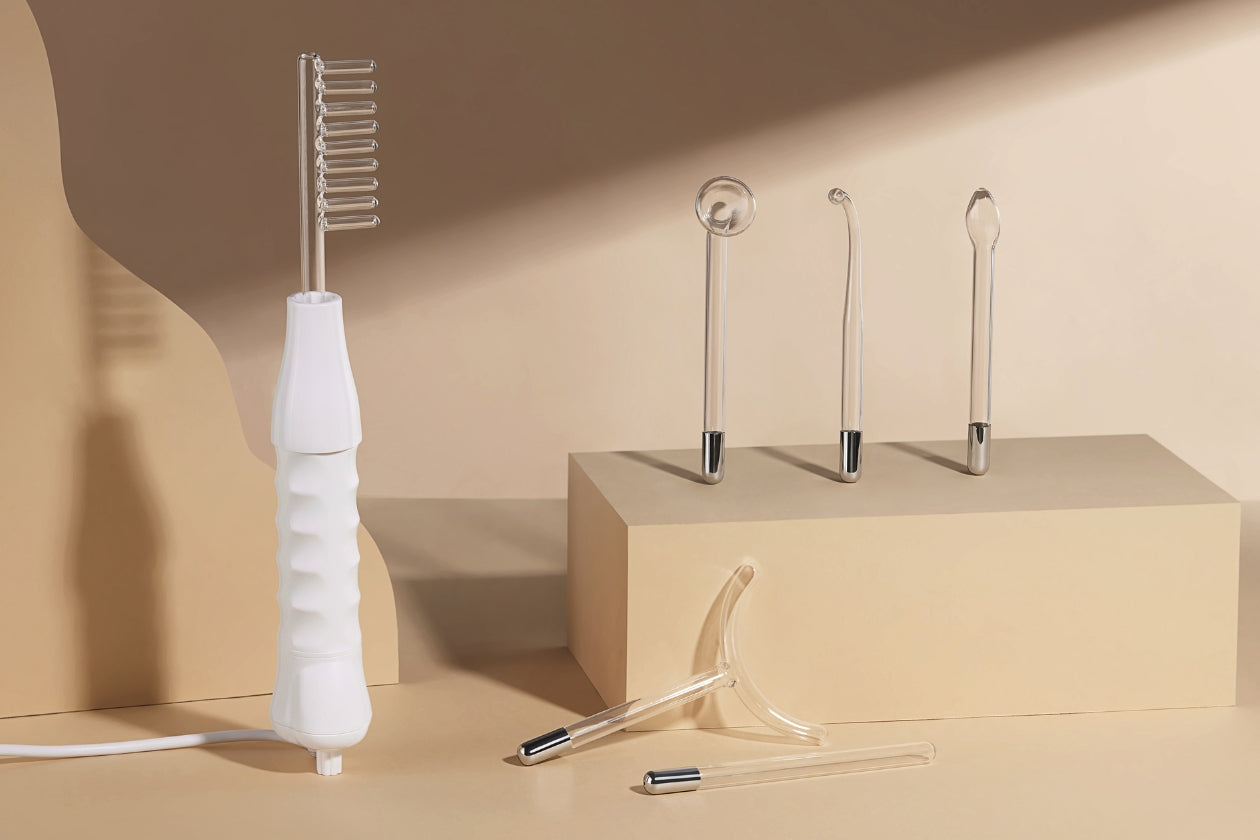
High‑Frequency Wand OEM: Optimize User Manuals to Reduce After‑sales Complaints
High‑frequency wand OEM guide for private‑label brands and wholesalers. Learn to optimize user manuals, safety warnings and mandatory non‑medical‑devi