
Huge Price Gap ? How to Judge Quality of High Frequency Wand
Why do high frequency wands have a huge price gap? Learn how to judge real quality, identify hidden defects, and avoid low-cost inferior products with real wholesale cases.
Introduction
High-frequency wands show a huge price gap on the wholesale market. Many devices look identical in appearance but are sold at very different prices. For salon owners, Amazon sellers, and bulk buyers, choosing the cheapest option often leads to hidden failures, high return rates, and bad reviews.
Most quality problems cannot be seen from a simply photos. The real price difference in fact lies on internal components, workmanship, safety design, and accessory quality.
In this buying guide, we conclued 6 aspects to judge high-frequency wand quality with real defect cases from bulk orders. You can quickly tell inferior products apart and reduce return and bad review rates to avoid losses
1. Internal Components (Stability & Durability)
The internal transformer and circuit board , decide whether the machine can work stably for a long time. Some factories often cut core configurations to save costs and make low price
Good quality: Full-spec transformer, stable power output, neat PCB welding, and built-in overheat protection parts. The machine keeps steady brightness after long working hours without overheating or power drop.
Inferior quality: Reduced transformer coils, thin circuit boards, and remove overheat protection components. The machine looks good without warming up after using for a period of times. but easily loses power after continuous use or even burns out.
Real Case: Power Drops After 10 Minutes of Use
Many cheap units work fine within 5 minutes but turn dim and weak after 10–15 minutes of continuous operation. This is caused by under-standard transformers without stable load performance. Some unprotected machines eventually burn the main board after long salon use.
Quick test: Always do a 15-minute continuous aging test for samples.
you can check our another post: why high frequency machine must undergo strick anti aging test .

2. Body Housing & Shipping Resistance
When customers tell us they’ve found an astonishingly low price, we’re often shocked, because with a product made at such a low cost, you can imagine just how poor the materials must be. For safety reasons, we often persuade buyers but they normally ignor and think they are just words for competetive to get the order.
High-quality commercial-grade devices feature delicate, flawless body finishing, while low-cost cut-corner products have obvious rough details at a glance.
Good quality: Thick flame-retardant ABS housing, precise mold opening, tight seamless splicing, smooth surface without burrs, uniform texture, and high-end salon-grade texture.
Inferior quality: Thin recycled plastic shells, obvious mold gaps, sharp burrs, uneven surface finish, and dull plastic texture. The overall rough and cheap look makes customers feel deceived, even if the basic function works.
Real Case: Some scary cases, I saw customer show me feedback picture from some factory that the host are full with lights all through the shell, you can even see the shadow of inner spare parts.
Poorly High Frequency host housing injection-molded casings not only have large gaps after assembly, but even the button connections are crooked and wobbly, as if they might fall off at any moment.
3. Control Knob & Touch Panel
Control failure is one of the most common after-sales issues. Low-cost potentiometers and touch chips cause unstable adjustment and random malfunction.
Good quality: Smooth knob rotation with clear power difference between each gear. Touch versions support long-press unlock and anti-misoperation.
Inferior quality: Knob slips with no obvious power change; touch panel jumps gears or turns on/off automatically.
Real Case: Knob Slipping & Random Touch Startup
Many buyers report that after 3–4 weeks of use, the knob spins freely without adjustment effect. Cheap touch models randomly activate when placed on the table due to unstable chip logic.
Quick test: Test full gear brightness change and static standby for 5 minutes.

4. Power Cable & Anti-Break Design
Most intermittent power failures are caused by poor cable workmanship, not main unit damage.
Good quality: Thick standard wire core with formal safety-certified plugs. The cable root adopts reinforced anti-break structure, resistant to repeated bending and long-hour continuous power supply, no heat or safety risk.
Inferior quality: To cut costs, cheap models use non-certified thin copper wires and unqualified plugs. The wire diameter is far below safety standards. The cable looks similar in appearance but cannot bear continuous high-frequency current. It heats up seriously during use, and the plug is prone to scorching, melting, and even burning out.

Real Case: Uncertified Thin Cable & Burned Plug (Serious Safety Hazard)
Many ultra-cheap high-frequency wands pass safety inspections with qualified samples, but deliver bulk goods with uncertified thin wires and inferior plugs. After continuous salon use, the overloaded thin wire generates huge heat, causing the plug to scorch, melt, or even burn black. This not only leads to device failure but also brings fire and electric shock risks, causing serious safety complaints and returns for wholesale sellers.
Quick test: Check the wire thickness and plug certification marks. Avoid ultra-thin cables and rough unmarked plugs; qualified devices keep the cable and plug slightly warm without overheating after long-time operation.
5. Glass Electrode Sealing Quality
Glass electrode air leakage is a hidden long-term defect. Bad electrodes work fine out of the box but fail after warehouse storage.
Good quality: Thick borosilicate glass with precise sealing, uniform glow, and no gas leakage after long storage.
Inferior quality: Thin glass, rough welding, and low-quality adhesive glue at the tube end. The poor sealing craft causes slow inert gas leakage. Most importantly, the inferior glue cannot fix the glass tube firmly. The glass electrode is very easy to loosen or completely detach from the metal base during daily plug and unplug operations.

Real Case: Electrodes Stop Lighting After 2-Month Storage
Many batches perform well on arrival but lose luminance after 1–2 months of stock due to gas leakage. Besides gas leakage complaints, another common issue is loose electrodes. End users often report that the glass tube separates from the metal base after several plug-and-unplug uses. This defect is caused by cheap adhesive glue at the tube joint, which cannot withstand normal daily operation, leading to easy detachment and product scrapping.
Quick test: Gently plug and unplug the electrode to check firmness. Qualified tubes are tightly bonded without looseness; inferior ones shake easily and have visible gaps at the tube end glue joint.
6. Whole-Machine Safety & Working Performance
Safety is the biggest difference between professional-grade high frequency facial spa machine and low quality grade wands.
Normal safe performance: Slight warmth after long work; only the base has minor induction tingling; stable working sound and clear gear difference.
Dangerous inferior performance: Obvious electric tingling on the whole shell, no power difference between gears, or strange sharp noise.
Real Case: Whole Body Electric Tingling (Safety Risk)
Unqualified recycled plastic shells lead to poor insulation, causing overall electric sensation. Such units do not meet cross-border safety standards and easily trigger negative feedback.

Reliable Portable High Frequency Wand Wholesale & OEM
When sourcing high-frequency wands, it is important to understand that a higher price does not always equal better quality. Many overpriced products rely on fancy marketing rather than solid internal workmanship. Meanwhile, ultra-low-cost goods come with hidden quality defects and safety risks as we listed above. The key to stable long-term wholesale business is to cooperate with a reliable and experienced high frequency wand manufacturer.
Xiamen Lucky Lion Technology owns over a decade of professional manufacturing and after-sales experience focused on high-frequency wand production and customization. We are deeply familiar with all industry hidden quality problems, from internal component configuration and sealing craftsmanship to safety standard compliance. We effectively help global wholesale and OEM clients avoid potential quality risks before mass production. Meanwhile, we provide competitive, transparent pricing without excessive markup, helping you stabilize product quality, reduce after-sales costs, and maintain steady brand profits with zero hassle.
All units adopt full-standard components, complete safety protection, and strict aging testing.
If you need stable wholesale supply, customized branding, or free sample testing, please contact our team for the latest catalog and quotation.
Related articles
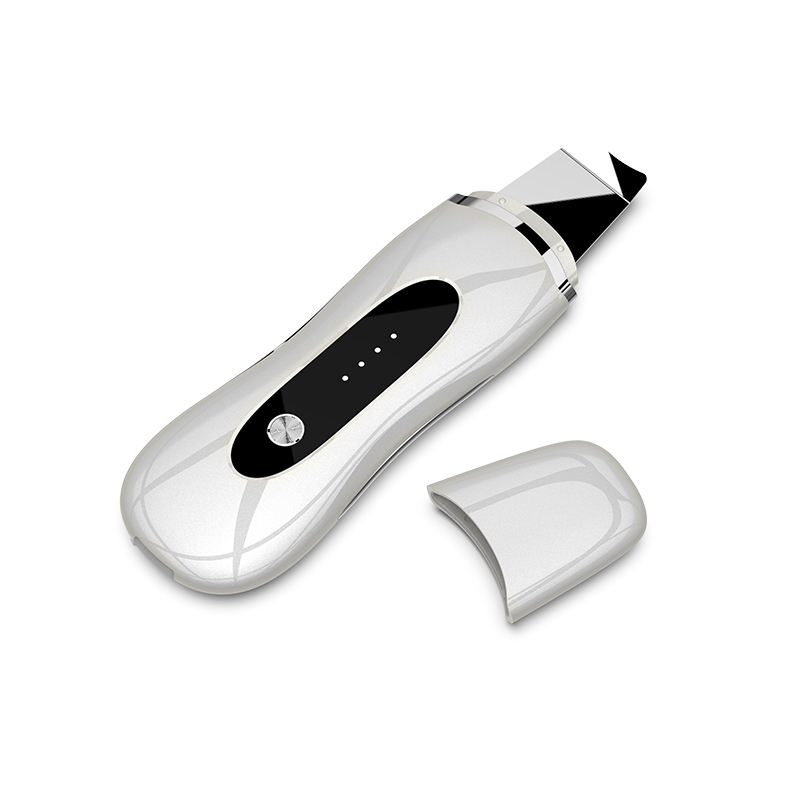
Why 24kHz–28kHz is the Gold Standard for Ultrasonic Skin Scrubbers: The B2B Manufacturing Truth
Discover the critical engineering gap between true 24kHz–28kHz piezoelectric cavitation and cheap vibration motors, and learn how to audit suppliers b
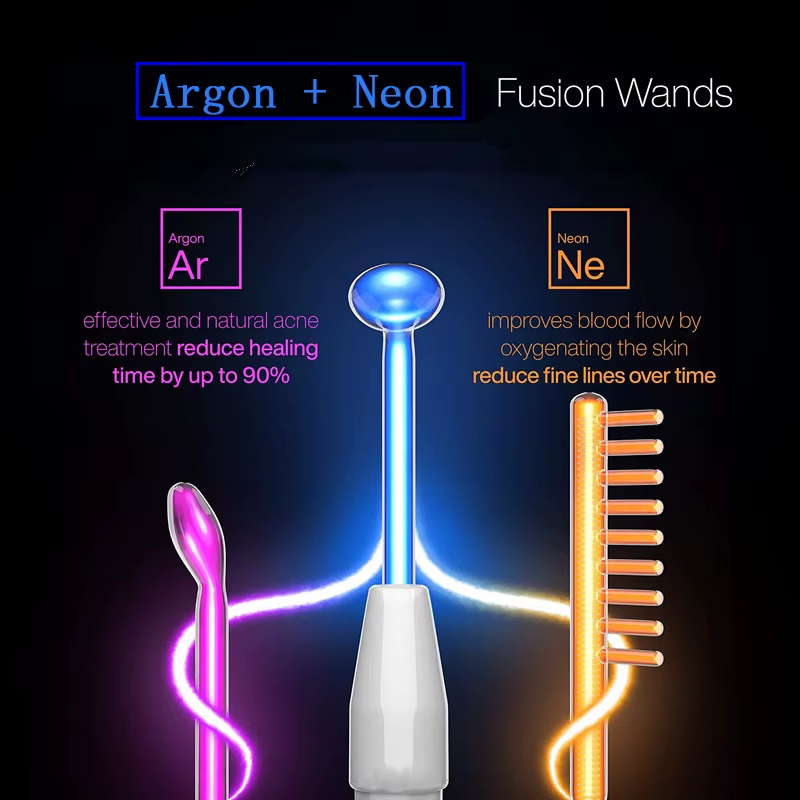
Neon, Argon, Fusion, Spiral Coil High Frequency Glass Electrodes
Learn the real differences between Neon, Argon, and Fusion gases, the science behind internal metal spiral coil electrodes, and why factory wholesale
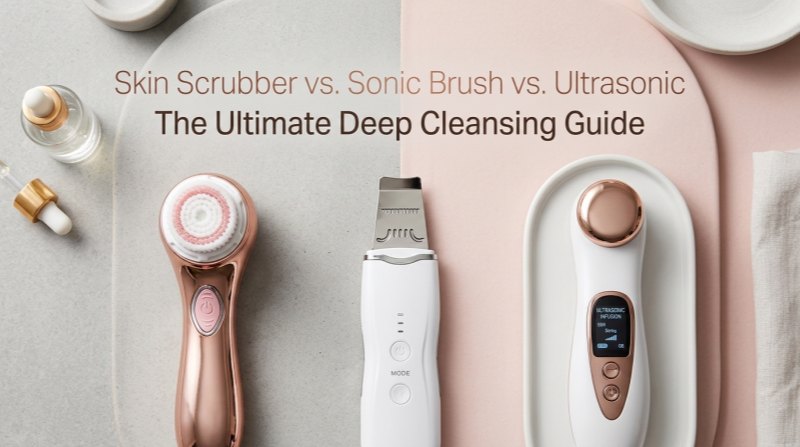
They All Claim to "Deep Cleanse"—But How Do They Actually Clean Your Skin?
Confused by skincare hardware terminology? Discover the real mechanical differences between Sonic Cleansing Brushes, Ultrasonic Skin Scrubbers, and Ul